Your Partner in Safety & Corporate Training
Your Partner in Safety & Corporate Training
- +603 7455 0100
- +6011 1628 8403 (Hotline)
- +6011 1628 8483 (Office Hour)
- info@skillstraining.com.my
- Mon - Sun : 08.30-17.30
Gap analysis, corruption risk assessment, documentation, internal audit and certification readiness, from first workshop to certification audit.
Since 1 June 2020, a Malaysian company can be prosecuted for bribery committed by anyone acting on its behalf, and its directors and management are presumed liable. The only defence is proof that the company had adequate procedures in place. An Anti-Bribery Management System built on ISO 37001 is the most widely recognised way to show that.
Skills Training & Consultancy Sdn Bhd (STC) is an ABMS training provider and consultant. We help organisations design, document and audit an ABMS that meets ISO 37001:2025, aligns with the Guidelines on Adequate Procedures issued under Section 17A of the MACC Act 2009, and is ready for Stage 1 and Stage 2 certification audits.

An Anti-Bribery Management System is a set of policies, controls and procedures that helps an organisation prevent, detect and respond to bribery. ISO 37001 is the international standard that sets out the requirements for such a system. In Malaysia it is adopted as MS ISO 37001, and certification is issued by certification bodies accredited by Standards Malaysia.
An ABMS covers bribery by and against the organisation, by its personnel and by business partners acting on its behalf. It is risk based: the controls you put in place should match the bribery risks you actually face, from tenders and procurement to permits, gifts, sponsorships and hiring.
Section 17A of the Malaysian Anti-Corruption Commission Act 2009 introduced corporate liability for corruption. It came into force on 1 June 2020 and applies to every commercial organisation in Malaysia, whatever its size.
Section 17A(1): A commercial organisation commits an offence if a person associated with it corruptly gives, agrees to give, promises or offers any gratification to any person, with intent to obtain or retain business, or an advantage in the conduct of business, for the commercial organisation.
Under Section 17A(4), the organisation has a defence if it can prove that it had adequate procedures in place to prevent persons associated with it from undertaking such conduct. The Prime Minister’s Department issued the Guidelines on Adequate Procedures on 11 December 2018 to explain what “adequate” means, built around five principles known as TRUST.
Adequate ProceduresISO 37001 maps closely to every TRUST principle. That is why an ABMS is the most practical way for a Malaysian company to build, prove and maintain adequate procedures.
Construction IndustryFor the construction sector, ABMS is moving from good practice to a registration requirement. Under CIDB Circular (Pekeliling) Bil. 1/2026, Grade G7 contractors applying for or renewing the Government Contractor Registration Certificate (SPKK) must hold a valid MS ISO 37001 certificate from 1 January 2027.
Government procurement policy also requires companies bidding for public projects above RM100 million to hold ISO 37001 certification, and CIDB’s contractor assessment gives additional recognition to ABMS-certified firms. With certification audits typically requiring several months of implementation evidence, contractors that have not started should begin now.
Planning tip: a certification body will want to see your ABMS operating, with a risk register, training records, an internal audit and a management review, before the Stage 2 audit. Allow at least three to four months between kick-off and your certification audit.
The 2025 RevisionISO published the second edition, ISO 37001:2025, in February 2025. It replaces ISO 37001:2016 and adopts the Harmonized Structure shared by ISO 9001, ISO 14001 and ISO 45001, which makes integration with your existing management systems simpler. Key changes include:
Standards Malaysia (ACB Circular No. 1/2025) has set a transition period for certified organisations. Certificates issued to ISO 37001:2016 will no longer be valid after 28 February 2027, so organisations certified to the 2016 edition need to complete their transition audit before then.
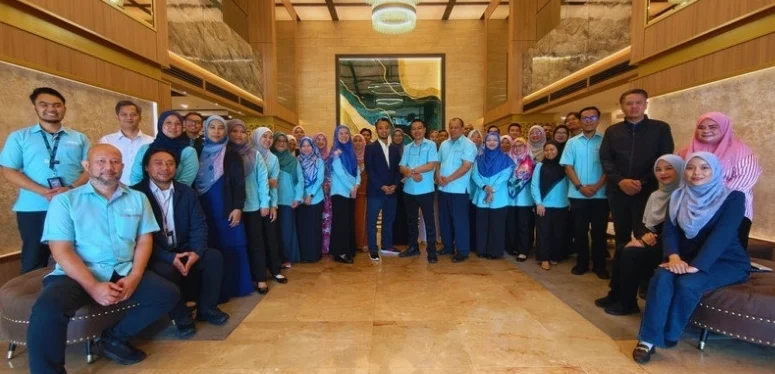
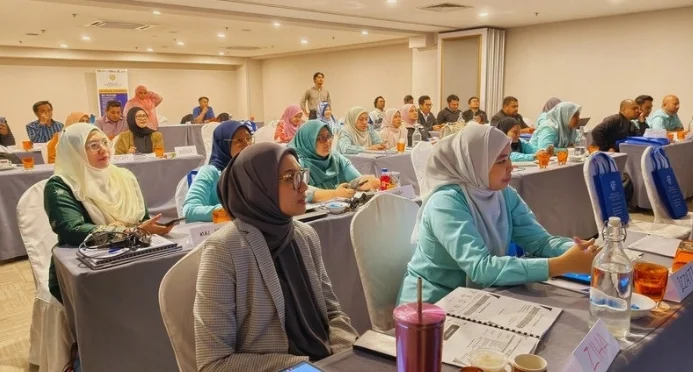
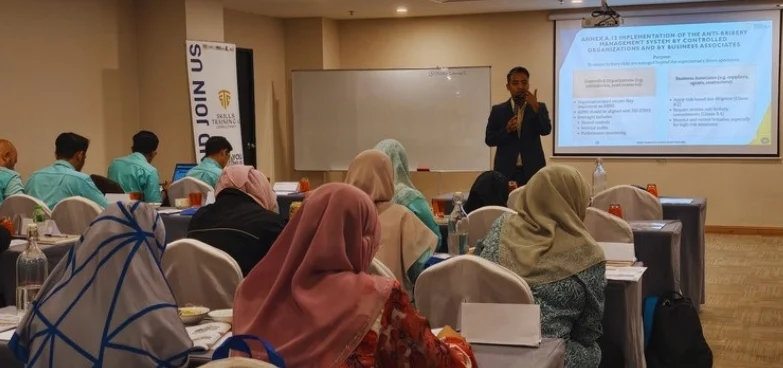
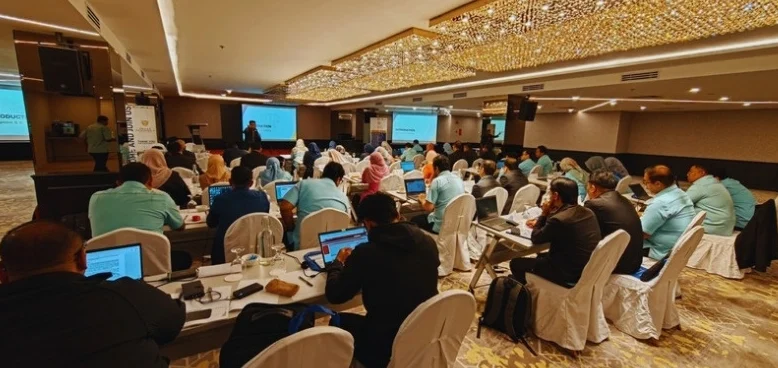
Our Track RecordSTC works with CIDB Malaysia as a training provider and consultant for ISO 37001. Our engagements have covered refinement of CIDB’s ABMS documentation in line with MS ISO 37001:2025, hands-on document development workshops, awareness and consultancy sessions, and internal auditor training for CIDB officers.
An Organisational Anti-Corruption Plan (OACP) is the strategic anti-corruption plan that Malaysian ministries, agencies, statutory bodies and GLCs develop in line with the National Anti-Corruption Strategy (NACS) 2024–2028. Where the OACP sets the organisation’s anti-corruption direction, initiatives and KPIs over several years, the ABMS provides the day-to-day controls, risk assessment and audit that make those commitments work.
Learn more on our dedicated OACP development consultancy page. STC supports CIDB Malaysia on both fronts: ABMS ISO 37001 training and consultancy, and the development of CIDB’s OACP 2.0 through Corruption Risk Assessment (CRA), stakeholder workshops, strategy development and training for top management, headquarters and state office personnel. We offer the same integrated approach to other public sector and government-linked organisations.
A typical STC engagement runs over three months and takes your organisation from gap analysis to certification readiness. Each phase ends with a clear output your team can use.
 FundingHRDC ClaimableTraining components for HRD Corp registered employers
Every programme can be run in-house for your organisation and tailored to your sector, processes and risk profile. Training components are HRDC claimable.
| Programme | Duration | What Participants Gain |
|---|---|---|
| ABMS Awareness ISO 37001:2025 | 2 Days | Section 17A, the TRUST principles and the requirements of ISO 37001, explained for managers, staff and business partners. |
| Clause Interpretation | Tailored | A clause-by-clause walkthrough of ISO 37001:2025 for ABMS committee members, compliance officers and process owners. |
| Corruption Risk Management (CRM) | 2 Days | How to identify, rate and treat bribery risks, and build and maintain the CRM register. |
| ABMS Document Development Workshop | 2 Days | Hands-on drafting of the policy, manual, procedures and records your system needs. |
| ABMS Internal Auditor | 2 Days | Planning and conducting ABMS internal audits, writing findings and following up corrective actions. |
Already running ISO 9001, ISO 14001 or ISO 45001? STC can integrate your ABMS into your existing management system. See also our guide to HIRARC for the risk assessment approach behind safety management systems.
FAQABMS stands for Anti-Bribery Management System. It is a structured set of policies, risk assessments, controls and reviews designed to prevent, detect and respond to bribery, built on the requirements of ISO 37001.
ISO 37001 is not mandatory for every company, but Section 17A of the MACC Act 2009 makes every commercial organisation liable for corruption by its associated persons unless it has adequate procedures. ISO 37001 certification is required for CIDB Grade G7 contractors from 1 January 2027 and for companies bidding for government projects above RM100 million.
A fine of not less than ten times the value of the gratification or RM1 million, whichever is higher, or imprisonment of up to 20 years, or both. Directors, partners and management can be held personally liable.
A typical STC engagement takes about three months from gap analysis to certification readiness. The timeline depends on the size of your organisation, the number of sites and how much of your existing documentation can be reused.
The 2025 edition adds requirements on anti-bribery culture, conflicts of interest, planning of changes and climate change, strengthens business partner training, and adopts the ISO Harmonized Structure. Organisations certified to the 2016 edition must transition by 28 February 2027.
An OACP is a multi-year strategic plan for preventing corruption, used mainly by public sector organisations in line with the National Anti-Corruption Strategy. An ABMS is an operational management system based on ISO 37001 that puts controls, risk assessment and audit in place. Many organisations use the ABMS to deliver the commitments in their OACP.
Yes. STC’s ABMS training programmes are HRDC claimable for HRD Corp registered employers. Contact us for the programme details your HRDC application will need.
ABMS bermaksud Sistem Pengurusan Anti-Rasuah (Anti-Bribery Management System) berdasarkan piawaian MS ISO 37001:2025. Ia merangkumi dasar anti rasuah, penilaian risiko rasuah, kawalan, saluran pemberi maklumat, latihan dan audit dalaman untuk mencegah, mengesan dan menangani rasuah dalam organisasi.
Di bawah Seksyen 17A Akta Suruhanjaya Pencegahan Rasuah Malaysia 2009 (Akta SPRM 2009), organisasi komersial boleh didakwa atas perbuatan rasuah oleh pihak yang berkaitan dengannya. Hukumannya ialah denda sekurang-kurangnya 10 kali ganda nilai suapan atau RM1 juta, mengikut mana yang lebih tinggi, atau penjara sehingga 20 tahun, atau kedua-duanya. Pembelaan hanya tersedia jika organisasi dapat membuktikan ia mempunyai prosedur yang mencukupi (adequate procedures) berdasarkan prinsip T.R.U.S.T.
Mulai 1 Januari 2027, kontraktor Gred G7 wajib memiliki sijil MS ISO 37001 untuk permohonan dan pembaharuan SPKK. Skills Training & Consultancy (STC) ialah penyedia latihan dan perunding ABMS ISO 37001 serta Pelan Antirasuah Organisasi (OACP) kepada CIDB Malaysia. Kami menawarkan analisis jurang, Pengurusan Risiko Rasuah (CRM), pembangunan dokumen, latihan juruaudit dalaman dan persediaan pensijilan. Latihan boleh dituntut di bawah HRDC.
Tell us about your organisation and your certification deadline, and we will propose an ABMS programme that fits your size, sector and risk profile.
Skills Training & Consultancy Sdn Bhd
B2-17-1, Space U8, No. 6, Persiaran Pasak Bumi, Bukit Jelutong, 40150 Shah Alam, Selangor
WhatsApp: 011-1628 8403 / 011-1628 8483
Email: info@skillstraining.com.my